
Napa Rose Chef’s Counter Review
I have eaten a lot of expensive Disney meals. Some are expensive because characters or entertainment are included. Some are expensive just because everything at Disney is expensive. And a very small number are expensive because the ingredients, service, and experience would cost a lot of money almost anywhere.
Napa Rose Chef’s Counter falls into that last category. At $250 per person before drinks, tax, and gratuity, this is not a reservation anyone can make casually. Our meal included ten courses served over almost three hours, with chefs preparing and plating food directly in front of us. The food was excellent, and several courses were among the best things I’ve eaten at a Disney restaurant. But when the check arrived, the more complicated question wasn’t whether the meal was good. It was whether the Chef’s Counter specifically was worth the extra money – or whether I’d rather experience Napa Rose from the lounge or main dining room instead.
Napa Rose Chef’s Counter Logistics
Location and Transportation
Napa Rose is located inside Disney’s Grand Californian Hotel & Spa. You do not need theme park admission to dine there, which makes this a relatively easy option for an arrival day, departure day, or an evening when you don’t want to use a park ticket.
If you’re coming from Disneyland Park, walk through Downtown Disney and enter the Grand Californian from there. From Disney California Adventure, the hotel’s dedicated entrance can make the trip even shorter. Just make sure you give yourself enough time to navigate any park-exit lines and find the restaurant. That being said, this is not the reservation where I’d recommend attempting to slide in right after sweating through attractions in the parks.
Guests arriving by car receive five hours of complimentary parking with validation from the hotel. Rideshare is also easy because you can be dropped directly at the Grand Californian instead of dealing with theme park transportation or parking.
Once you’re inside the hotel, Napa Rose is located on the first floor, not far from the lobby. And if you have never visited the Grand Californian before, this is a good excuse to arrive with enough time to explore. The Arts and Crafts design is beautiful, and the lobby is worth more than a hurried walk-through on your way to dinner.
Reservations and Availability
Napa Rose Chef’s Counter reservations can be made online or through the Disneyland app. Disneyland dining generally opens up to 60 days in advance, and I would absolutely book the Chef’s Counter as soon as your date becomes available. Same-day reservations are theoretically possible, but this experience only accommodates up to 18 guests, so I would not count on any last-minute availability.
During our visit, those 18 guests were divided into three groups of six. The first two groups were seated at different sections of the counter, and the last six were seated at a table off to the side of the kitchen. All three groups had specific reservation times rather than arriving together for one large seating.
This is an important distinction if the words “Chef’s Counter” are the main reason you’re paying for this experience. The guests at the side table still had a view into the kitchen, but they were not sitting directly at the counter. I don’t know whether the exact seating arrangement changes, but it’s something I would ask about if the counter seat itself matters significantly to you.
Parties smaller than six are seated with other guests. That worked perfectly well for us, but this is not necessarily an intimate private dinner unless you reserve all six seats in your section. You’ll be eating and watching the kitchen alongside strangers for almost three hours.
Our reservation was at 6:15 p.m., and the last course arrived at 8:59 p.m. That makes this a full-evening commitment. I would not schedule World of Color afterward, make plans to return to the parks for several attractions, or promise your children that you’ll be back at the hotel by bedtime. Assume the experience will take roughly three hours and be pleasantly surprised if you finish sooner.
Also pay close attention to the cancellation policy. Chef’s Counter reservations must currently be cancelled at least seven days in advance to avoid being charged the full $250-per-person prix fixe price. That is much stricter than a standard Disneyland dining reservation.
Cost
At the time of this writing, Napa Rose Chef’s Counter costs $250 per person before tax, gratuity, or beverages. For a party of two, you are starting at $500 before ordering a single drink.
There are three tiers of wine pairings available. Our dining party shared the highest-tier pairing, which cost $500. Yes, five hundred dollars for the pairing. It was nice. We drank some very good wine. The sommelier clearly put care into matching the pours with the progression of the meal. And after he described one of the wines as “popping open a bottle of Wilsons tennis balls” and we made the ridiculous request that all future wines be described as sports balls, he gamely played along.
Even still, I would not do it again. Even sharing the pairing among four people made our total bill climb very quickly, and it didn’t make the evening significantly better than it would have been without it. Near the end of the meal, we were also offered the opportunity to purchase an additional dessert wine. After spending $500 on a wine pairing, being invited to pay even more for the wine that would accompany dessert felt like an odd ending.
I also ordered two cocktails: the Big Sur Ahh for $19 and the Angel’s Camp Bohea for $18. Those were much more reasonable additions to the meal, at least by fancy Disney restaurant standards. I’ve ordered plenty of bourbon cocktails across Disney property, and these were incredible for the price I paid. On a future visit, I would happily order one or two cocktails (or ask the sommelier for a particularly interesting glass of wine) and leave the top-tier pairing for someone who will appreciate every individual pour enough to justify the cost.
The Chef’s Counter price is obviously high, but ten courses and nearly three hours of dining make the food portion easier to justify than the pairing. Whether the entire package feels worth it will depend heavily on how much value you place on sitting inside the kitchen and watching the chefs work.
Napa Rose Atmosphere
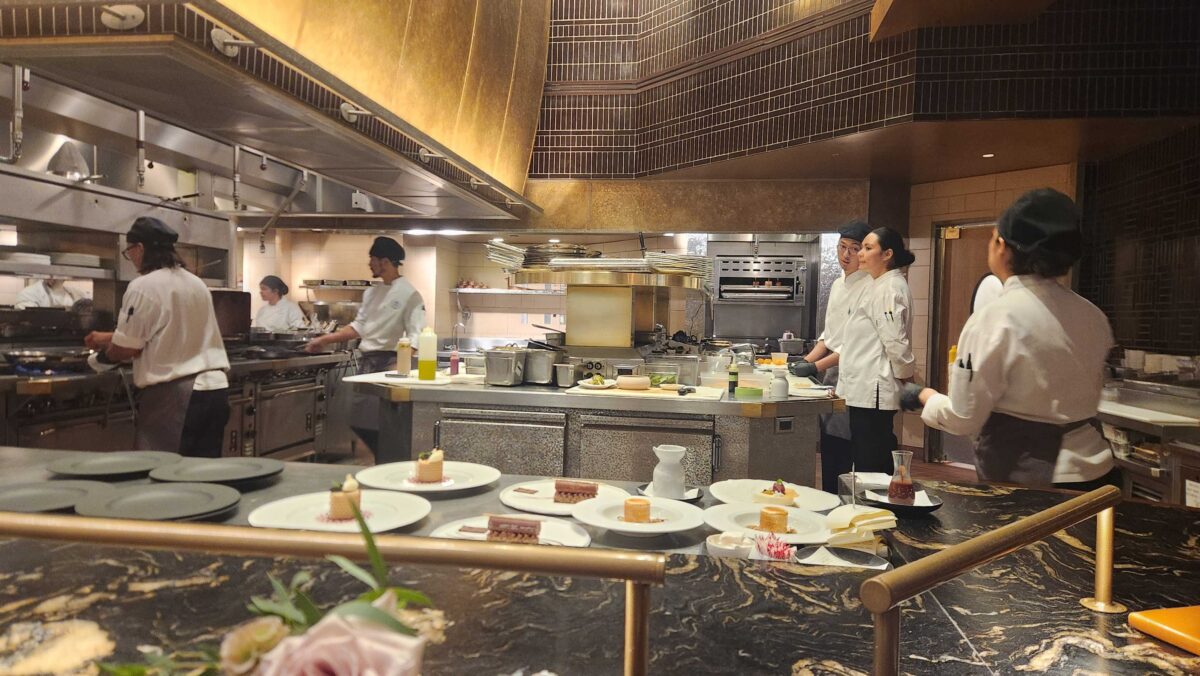
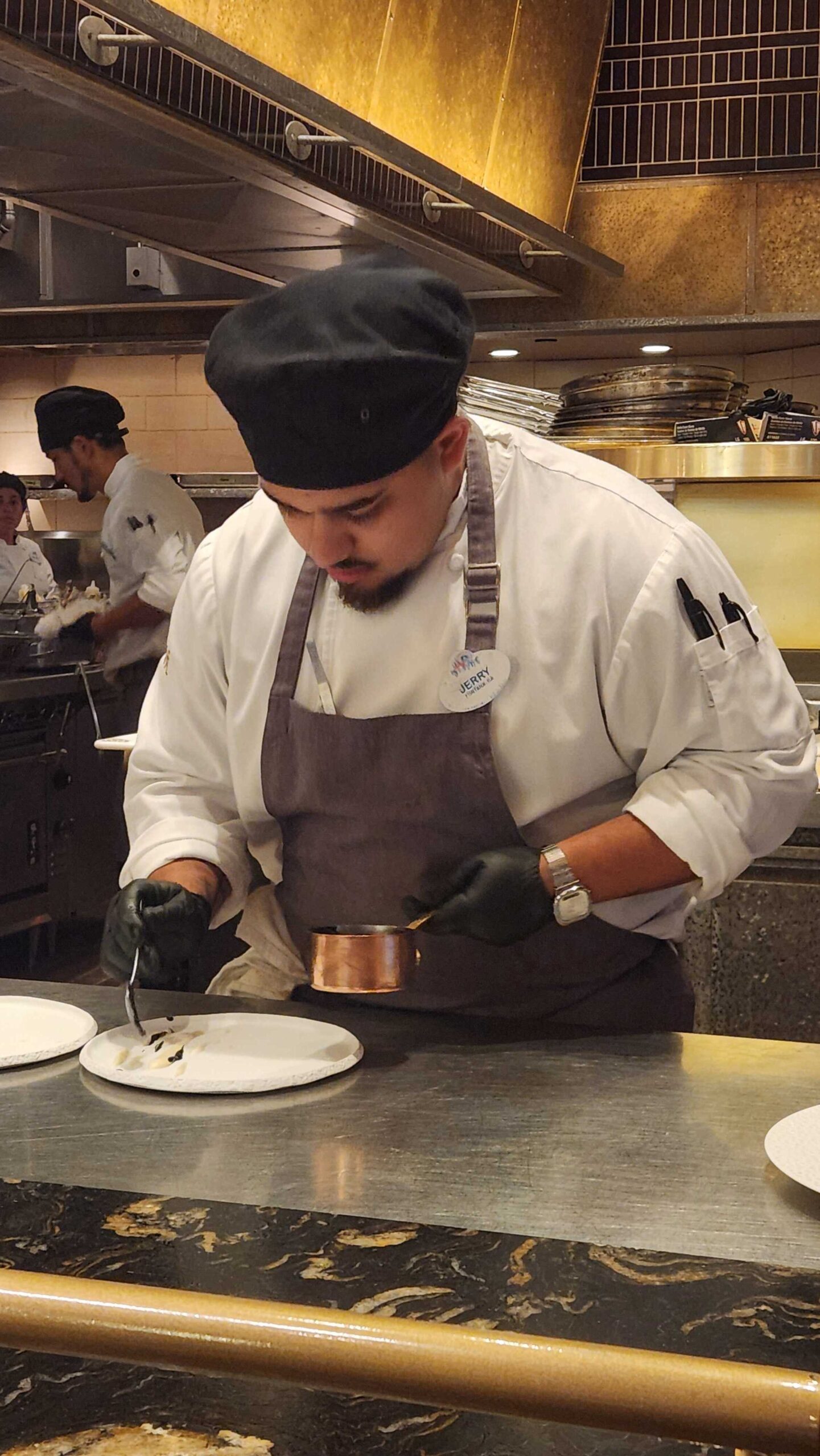
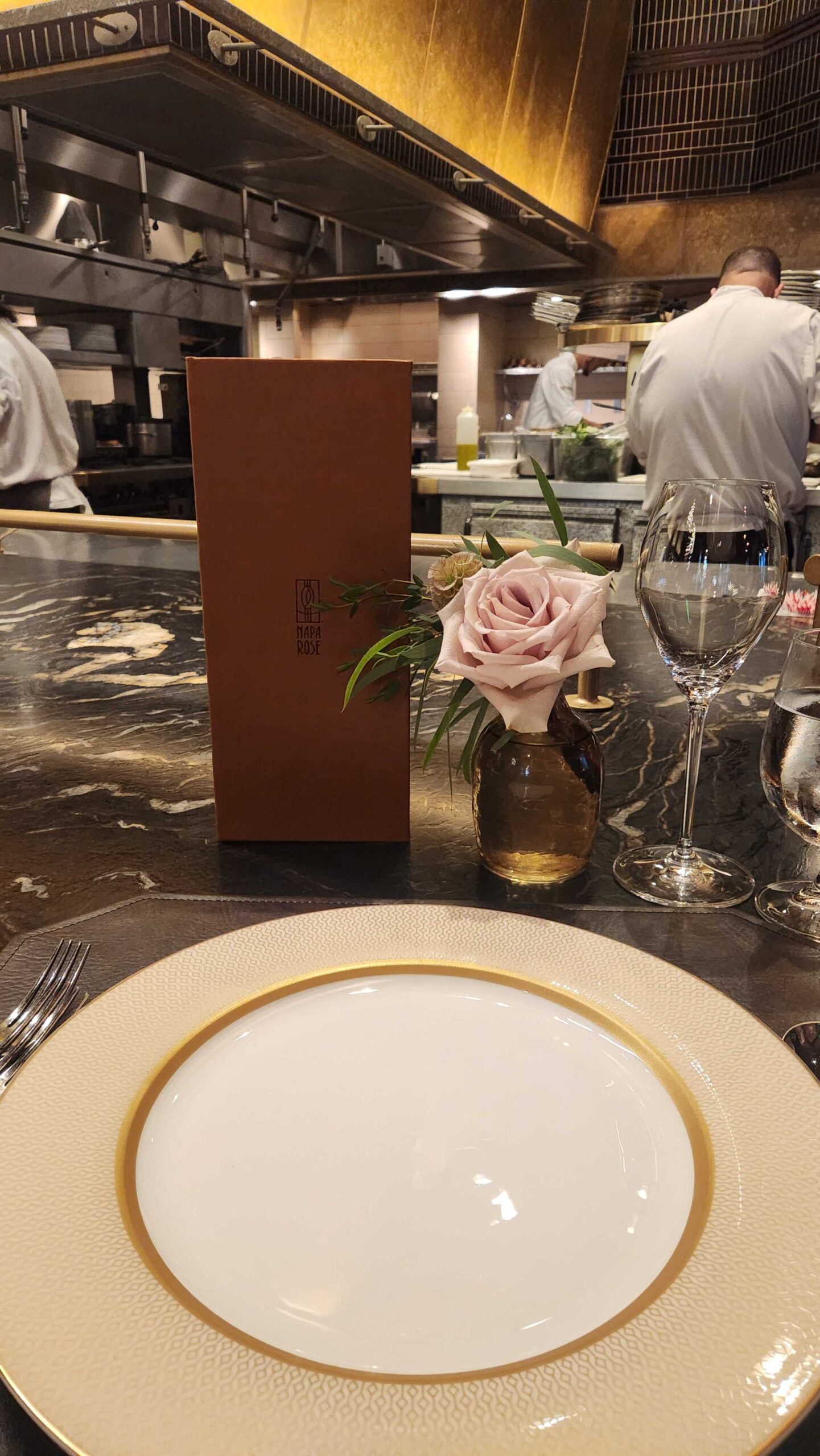
Napa Rose recently received a significant refurbishment, and it finally feels like it belongs inside the Grand Californian. There are warm copper tones, dark stone, wood, leather menus, and subtle floral touches. It is upscale without becoming sterile, and is no longer stuck in a 90s vibe. The Chef’s Counter is separated from the kitchen by a relatively low barrier, so you have a very clear view of the chefs moving around, preparing ingredients, and plating dishes. This is not one of those “open kitchens” where you can vaguely see flames in the distance. The chefs are directly in front of you.
That said, I would reset any expectations that this is going to be three hours of continuous chef interaction. The chefs primarily spoke with us when they delivered each dish. They explained what we were eating, and they were happy to answer questions, but they also had a very busy restaurant to operate. This was more like being given an excellent view of their work than being the focus of their attention all evening.
Our visit happened to fall on the executive chef’s second day in the position. He was present, involved, and moving throughout the kitchen, but the overall experience understandably did not feel like a long-established performance that had been rehearsed down to the second.
That is probably the biggest difference between this experience and Victoria & Albert’s. At Victoria & Albert’s, the service is intensely prepared and anticipatory. Details have generally been accounted for before you realize there was a decision to make. Napa Rose felt much more casual and organic. The courses arrived smoothly, but the service was not choreographed in the same way.
For example, we were not given a printed menu before or after the meal. Because the dishes change regularly and the chefs decide what to serve, I didn’t necessarily expect to select from a menu. But after ten courses, two cocktails, and some shared wine, it became difficult to remember exactly what we had eaten.
Disney requests smart-casual attire for dinner. We saw guests dressed nicely, but this is not Victoria & Albert’s. You do not need to arrive in formalwear, and the atmosphere does not feel stuffy.
Napa Rose Food
The exact courses at the Chef’s Counter change based on seasonality, ingredient availability, and the chefs’ plans for the evening. Disney describes it as a personalized culinary experience, so you should not expect to receive this same menu. Napa Rose also asks about dietary restrictions during the reservation process and requests advance notice for special dietary needs, although we didn’t have any allergies and therefore can’t speak to how successfully the kitchen handles specific accommodations.
Our ten-course menu was:
- Ahi Carpaccio Caviar
- Potato, Egg, and Caviar
- Thai Red Snapper
- Farmers Market Soup
- Duck Breast
- Truffle Chianti Pasta
- A5 Wagyu
- Corn Semifreddo
- Ice Block Sorbet
- Cherry Tart
We also received chocolates at the end! Can’t beat that.
Ahi Carpaccio Caviar
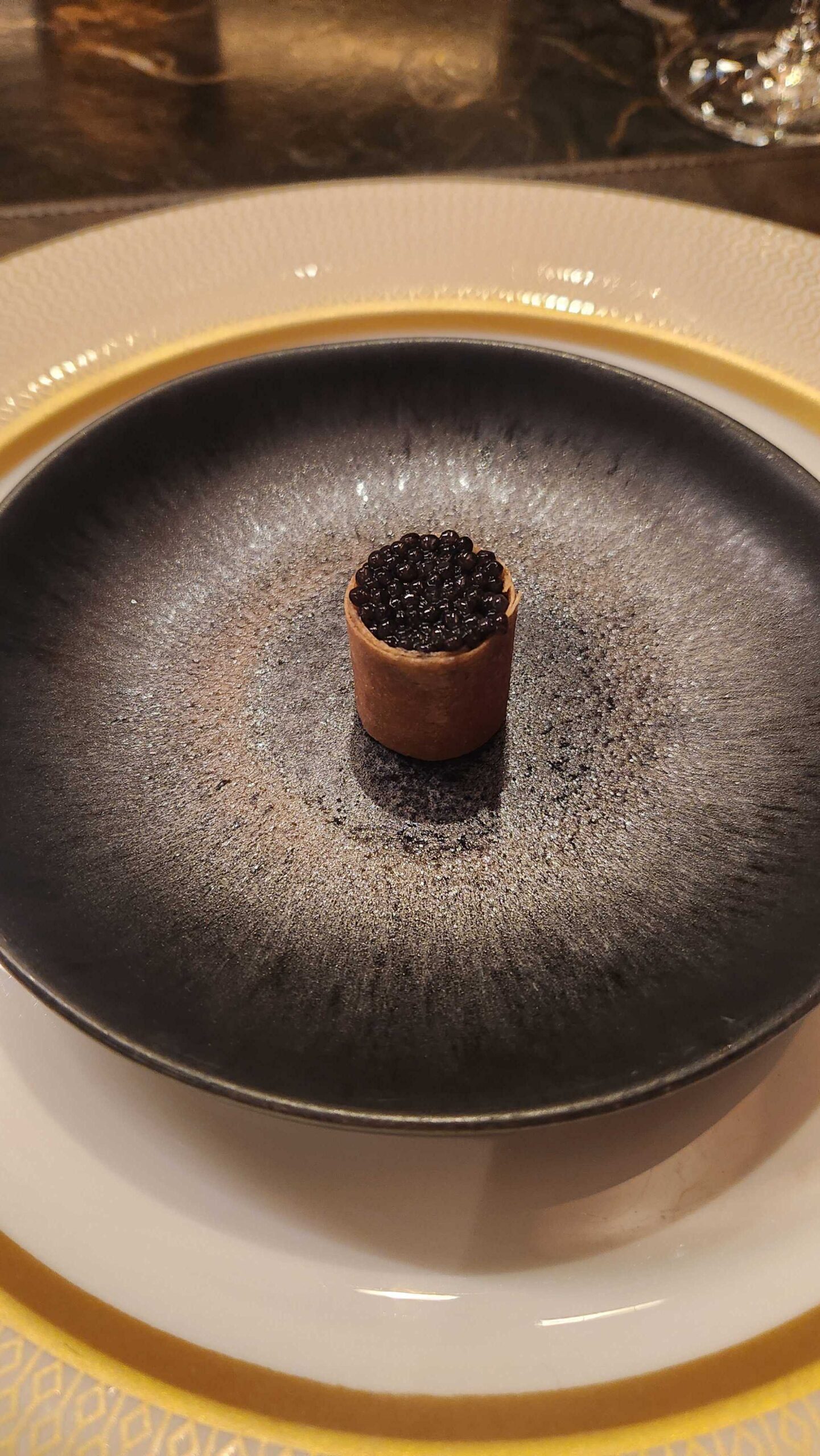
Our meal started with a single small bite topped generously with caviar. This is a very confident way to start a tasting menu: tiny portion, expensive ingredients, no warm-up round of bread to ease you into things.
The flavors were clean and salty, and the crisp base gave the dish enough texture to keep it from being one soft bite. It was a nice introduction to the style of the meal: restrained portions, high-quality ingredients, and attractive plating without a lot of unnecessary decoration.
Potato, Egg, and Caviar
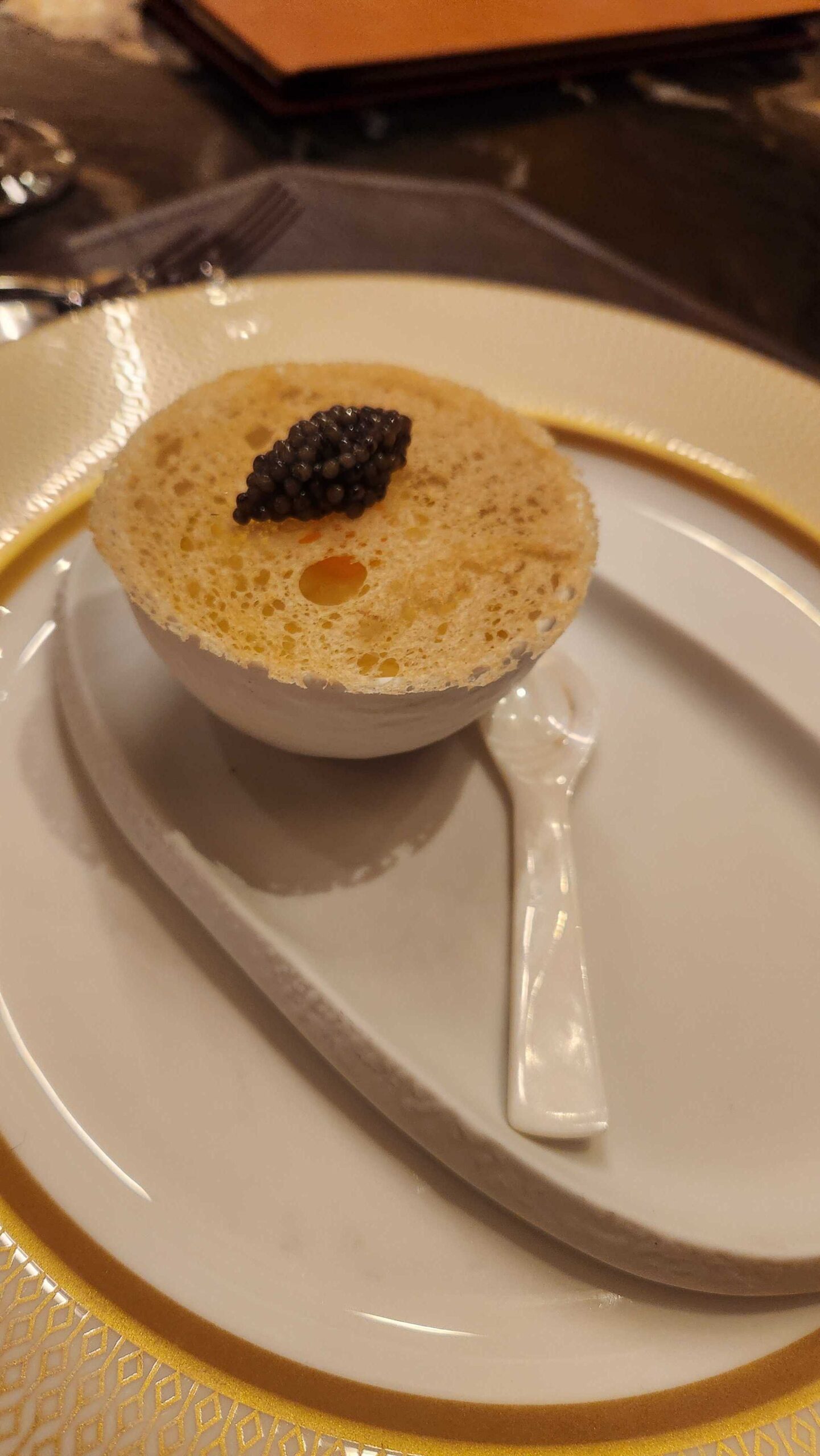
This was one of my favorite courses of the night! Potato, egg, and caviar is not a particularly revolutionary combination. Fat, salt, and starch have been friends for a long time. But this version layered the ingredients beautifully, with a delicate crisp covering the bowl and caviar sitting on top.
Once we broke through the top, the rich potato and egg underneath balanced the salty caviar. It was warm, creamy, crisp, and briny all at once. This was the dish where I first had the “oh, this is going to be a very good meal” reaction.
It was also our second caviar course in a row. I like caviar, and both dishes were excellent. But two out of ten total courses featuring caviar felt like an unusual distribution, especially when three more courses would eventually be desserts. That left only five courses for all of the other savory possibilities available to the kitchen.
Thai Red Snapper
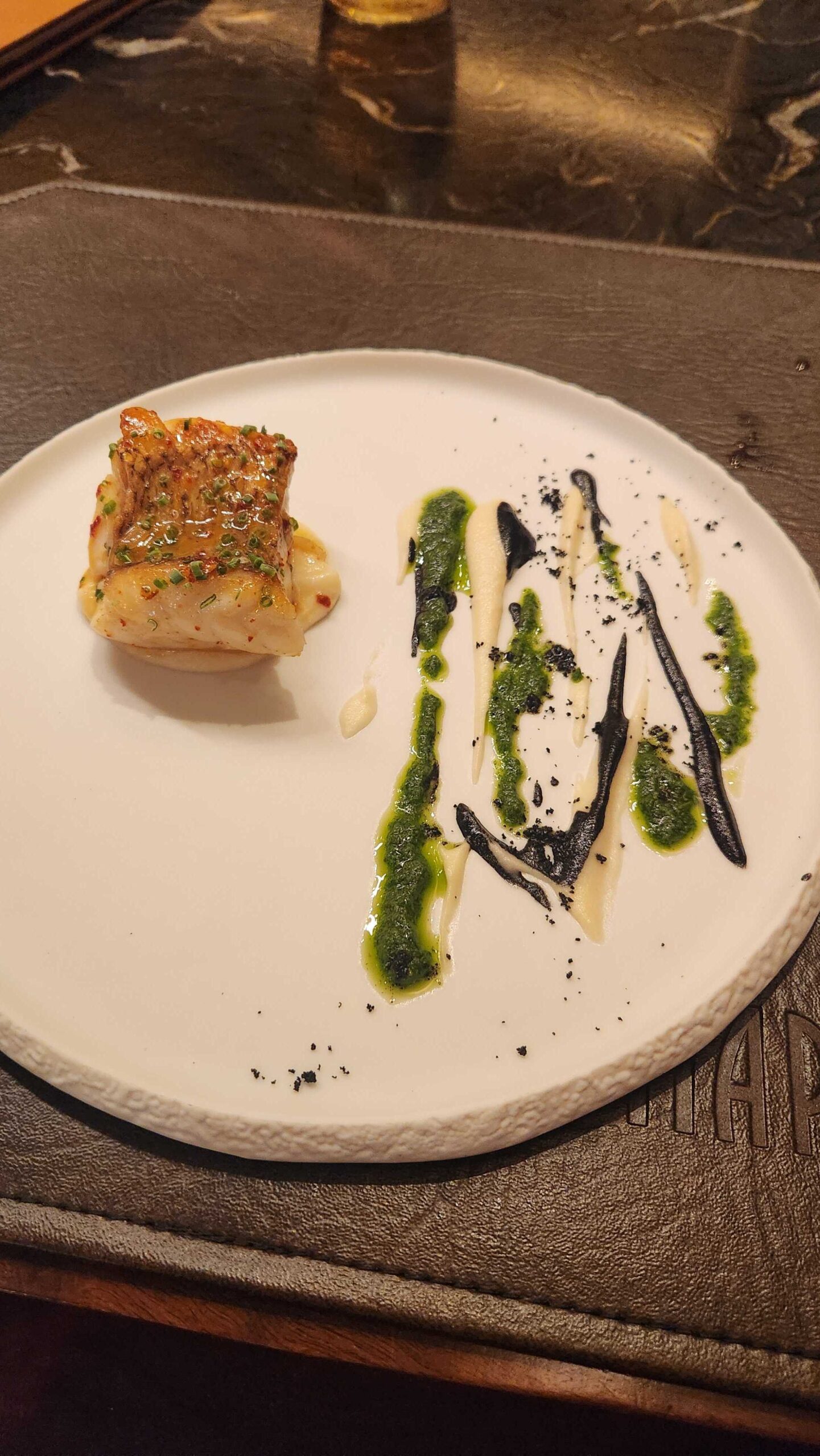
The Thai red snapper was beautifully cooked and served with a combination of sauces across the plate. The fish itself remained the focus, rather than serving as a delivery mechanism for a pile of heavy accompaniments. This was probably one of the most visually striking savory dishes of the night. It also worked well in the progression of the meal, providing a lighter seafood course before we moved into soup, duck, pasta, and beef.
Farmers Market Soup
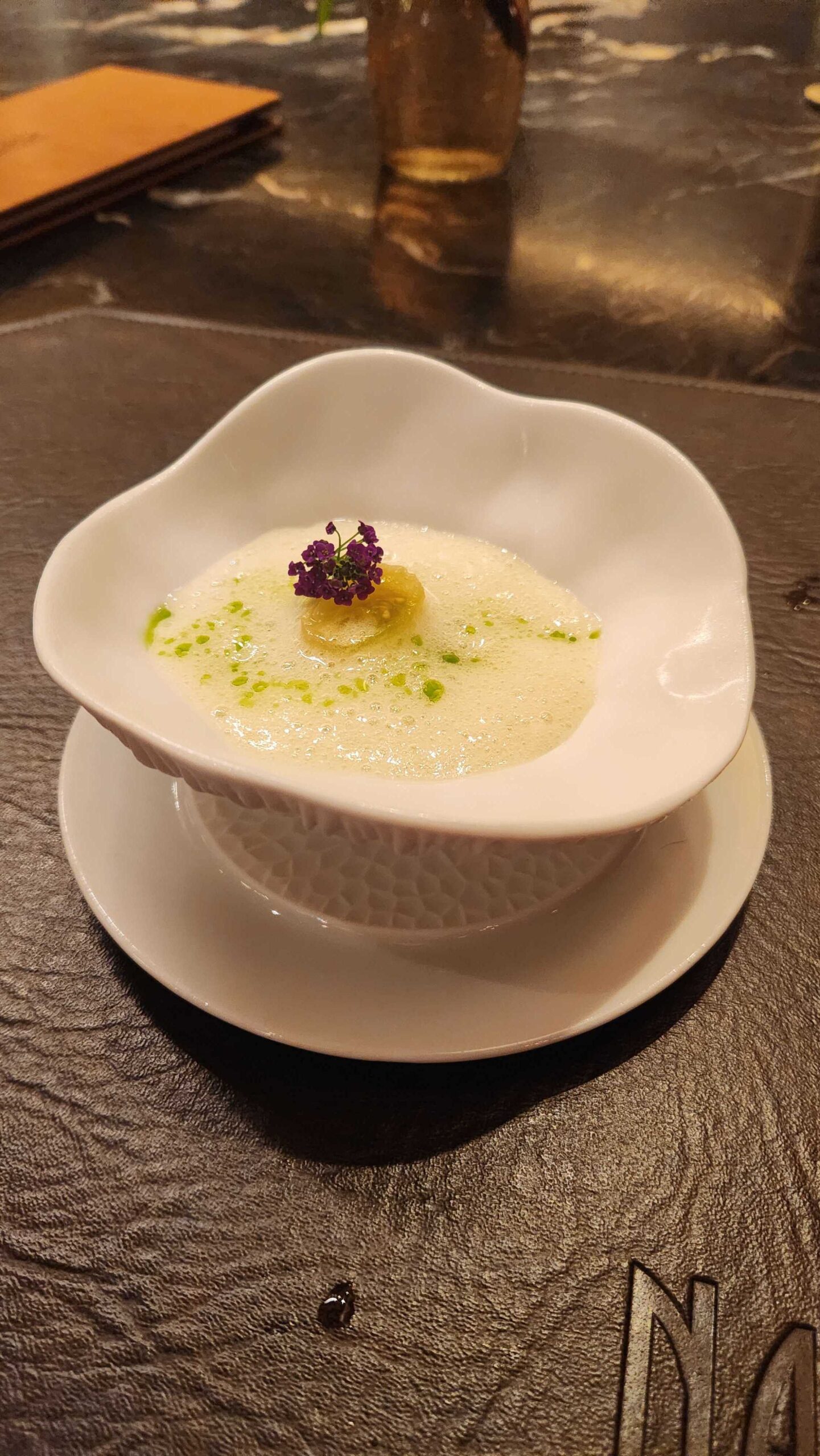
The Farmers Market Soup arrived in a sculptural white bowl with a light foam and a small vegetable garnish in the center. Because the tasting menu is built around seasonal ingredients, this is exactly the kind of course that could change significantly depending on when you dine.
This was comforting and nicely executed, although it did not stand out as much as the courses immediately before and after it. In a meal filled with caviar, truffles, and A5 wagyu, a vegetable-focused soup has a difficult job. It was fine, but it didn’t stand out as much as the other courses.
Duck Breast
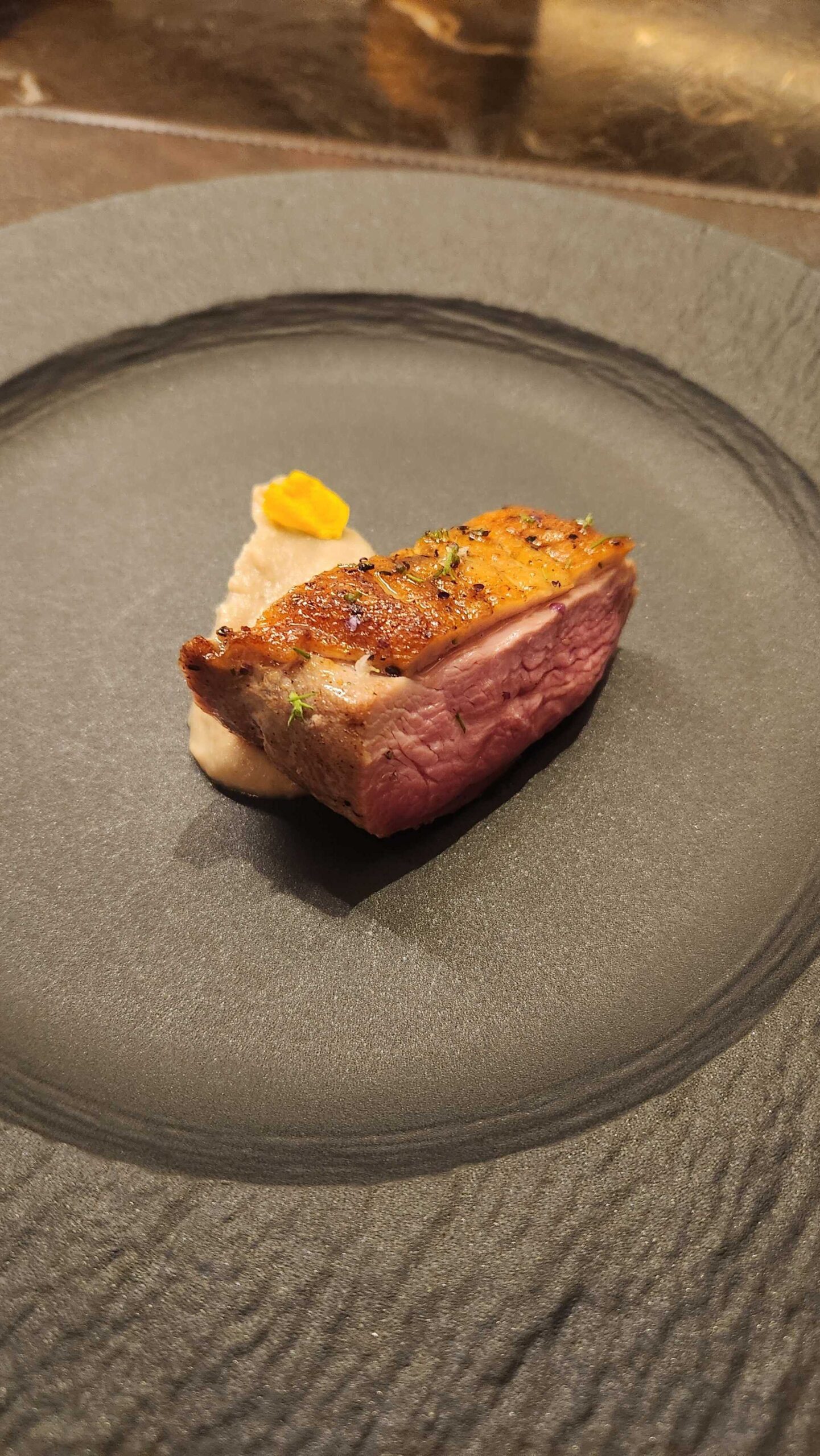
The duck breast was cooked beautifully, with crisp rendered skin and a pink center. Not tough like duck can sometimes be. It was served simply, with a purée and a small garnish rather than a plate overloaded with competing sides.
I have no real criticism of this course. It was technically excellent. It also had the misfortune of being immediately followed by my favorite savory stretch of the meal, and so it ended up being somewhat overshadowed.
Truffle Chianti Pasta
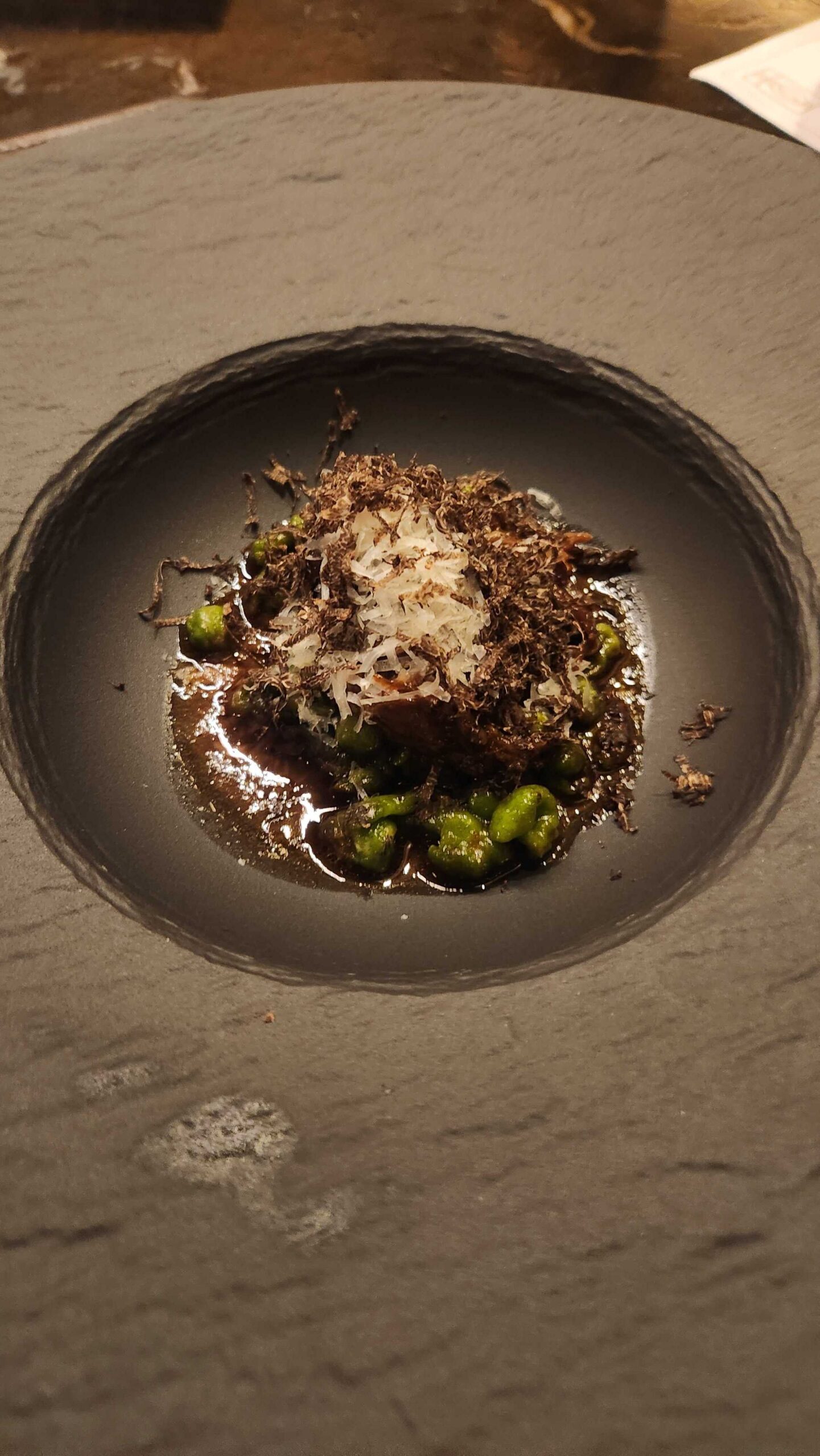
This was another one of favorite courses! The pasta was served with a dark Chianti sauce, green pasta pieces, plenty of cheese, and shaved truffle over the top. There was absolutely no subtle guessing game about whether truffle was present. You could smell it as soon as the plate arrived.
This dish was earthy, rich, and deeply savory, but the portion was small enough that it never became overwhelming. It is exactly the type of pasta that I would love to order as a full entrée and would probably regret ordering as a full entrée halfway through eating it. As part of a tasting menu, it was perfect. Enough to experience all of that richness without reaching the point where every bite tastes the same.
A5 Wagyu
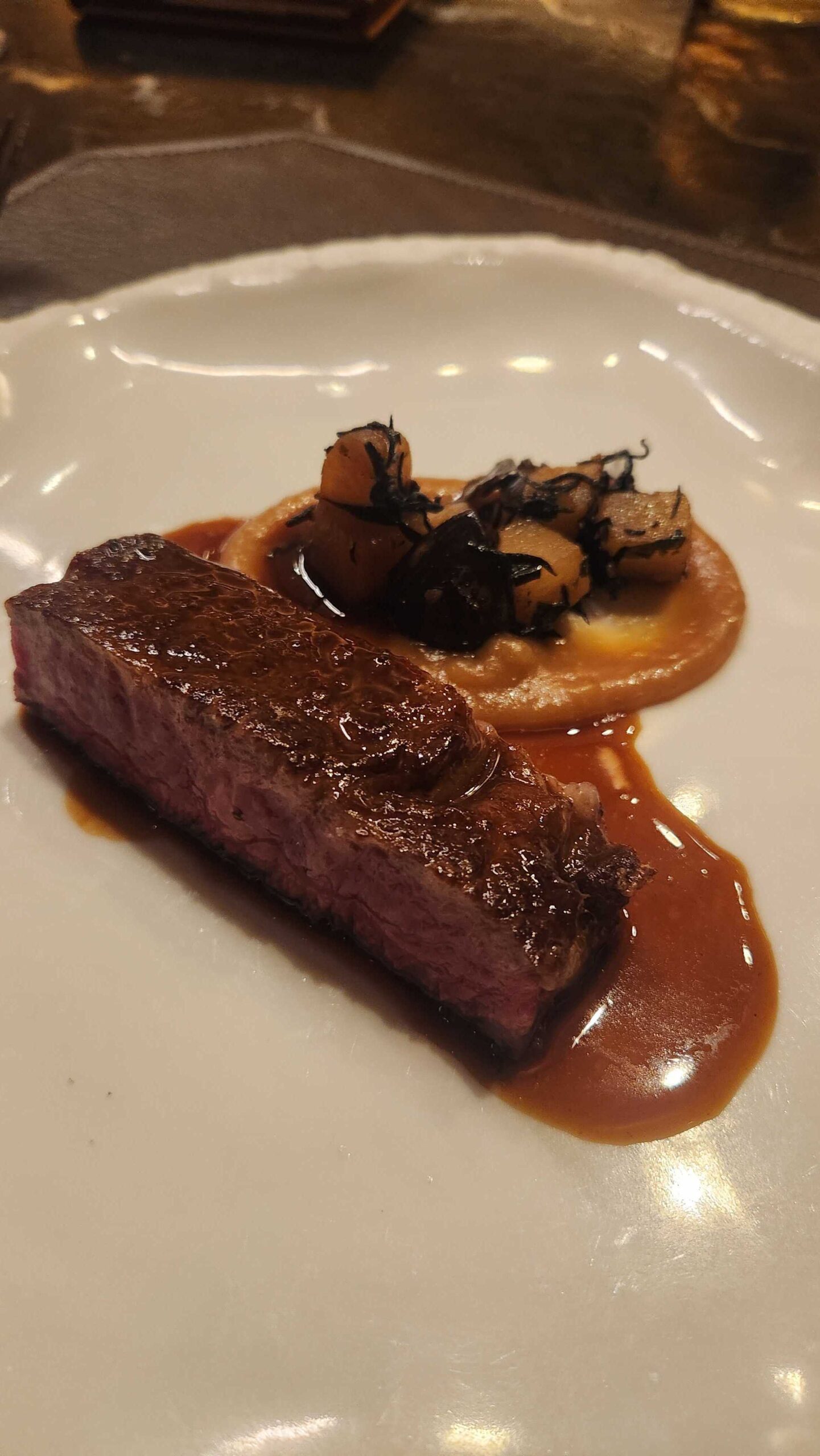
The A5 wagyu was the true stand-out of the night. A5 wagyu is so marbled and rich that a small portion is appropriate. You do not need a 12-ounce steak. The beef was cooked perfectly. It had the soft texture and concentrated flavor you expect from high-grade wagyu, and it arrived at exactly the right point in the meal. By course seven, I was getting full – but not too full to appreciate a few excellent bites of beef.
This was the strongest ending to the savory portion of the menu that I could have asked for. I would happily order this again.
Corn Semifreddo
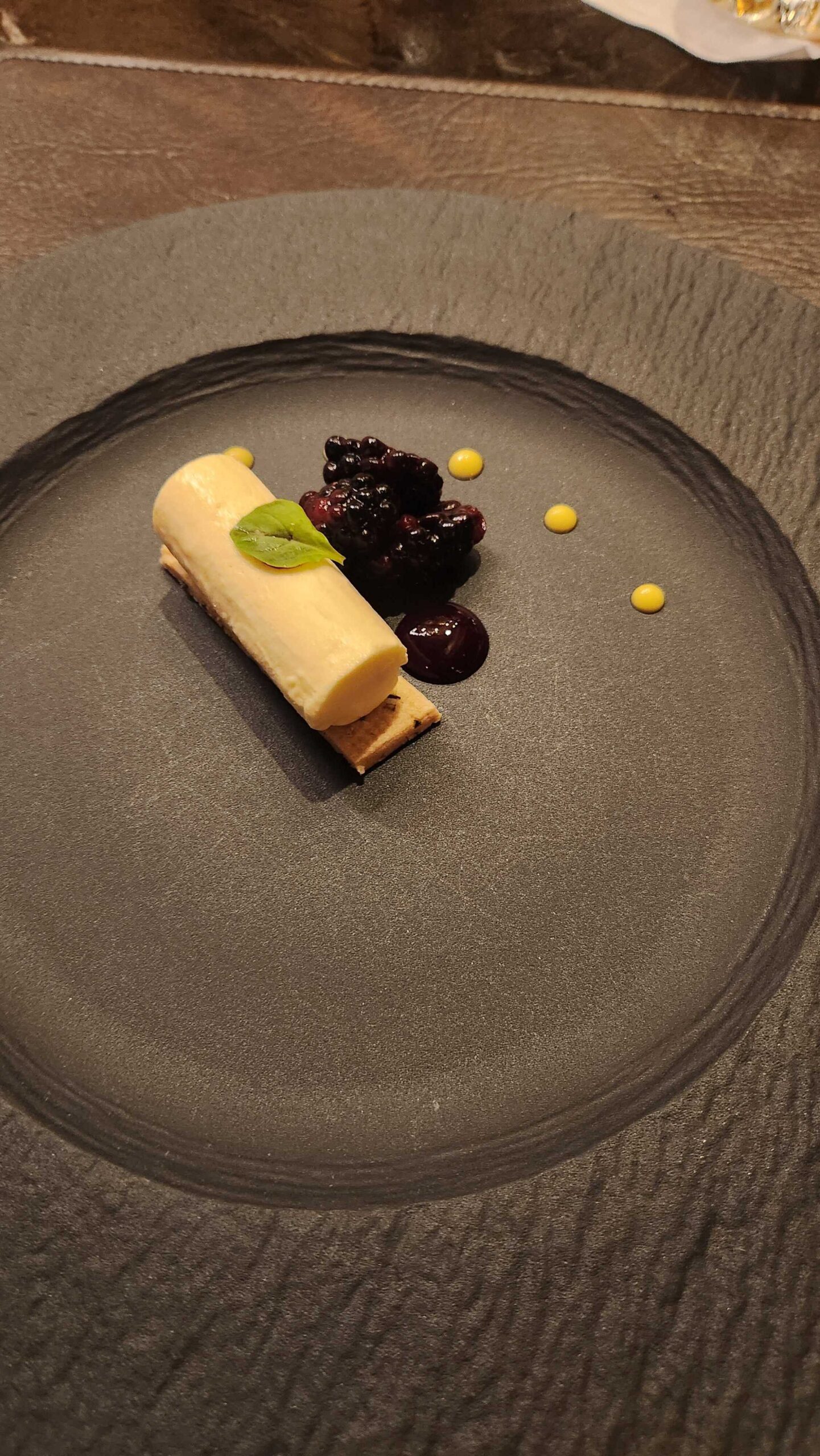
Next we moved onto dessert. And stayed there for three courses. The corn semifreddo was served with dark berries and a crisp base. Corn can work really well in desserts because it has its own natural sweetness, and the tart berries kept this from becoming too heavy.
This was probably the most interesting of the three desserts from a flavor perspective. It was recognizable enough to be approachable, but different enough that I would not have predicted it before seeing the menu.
Ice Block Sorbet
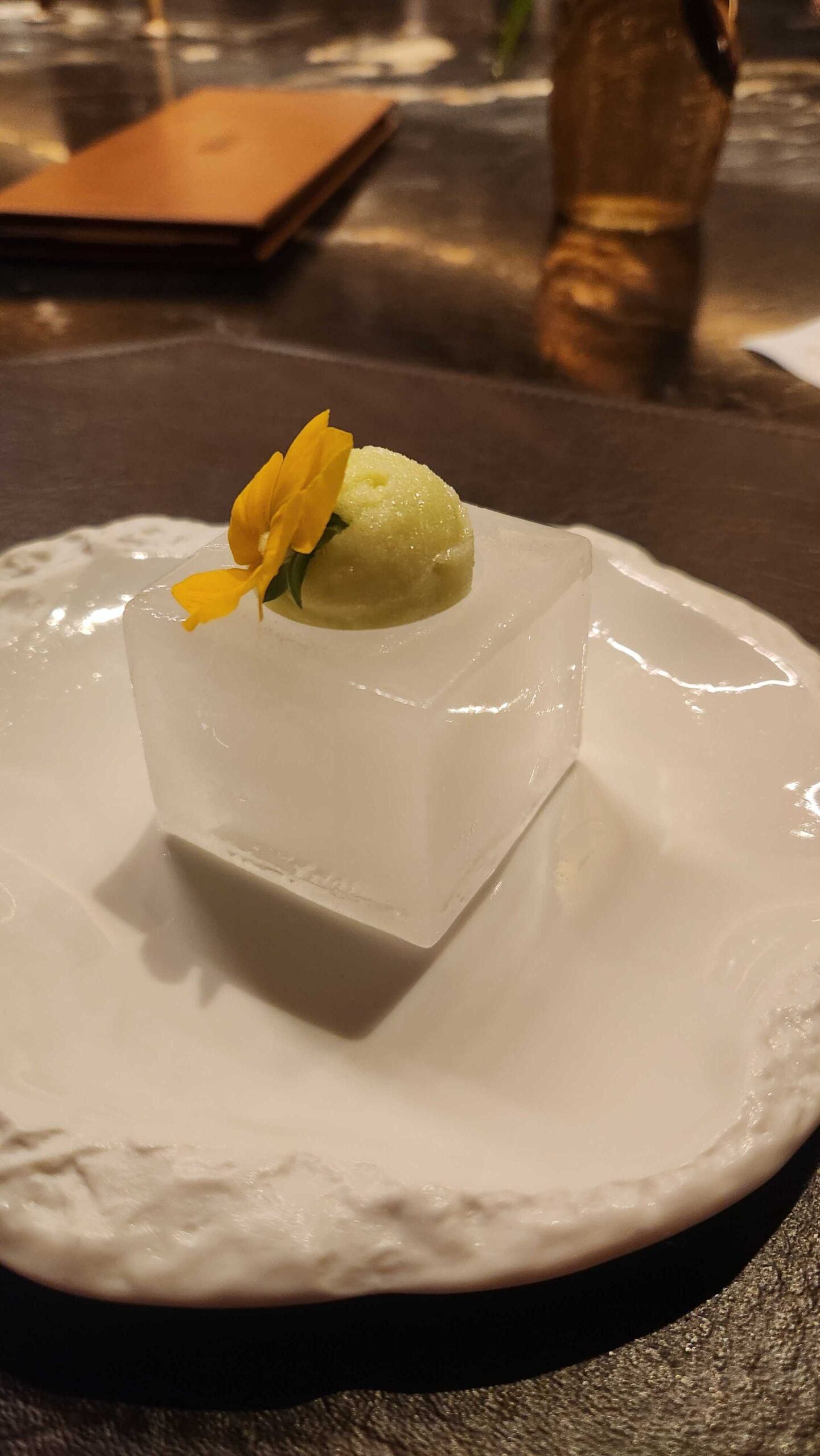
The ice block sorbet won the presentation award! A small scoop of wasabi sorbet, topped with an edible flower, was served on a clear block of ice. It was simple, cold, and refreshing after the wagyu and semifreddo.
Calling this a separate dessert course makes the three-dessert balance sound slightly more excessive than it felt in practice. This was essentially a palate cleanser with a dramatic serving piece.
Cherry Tart
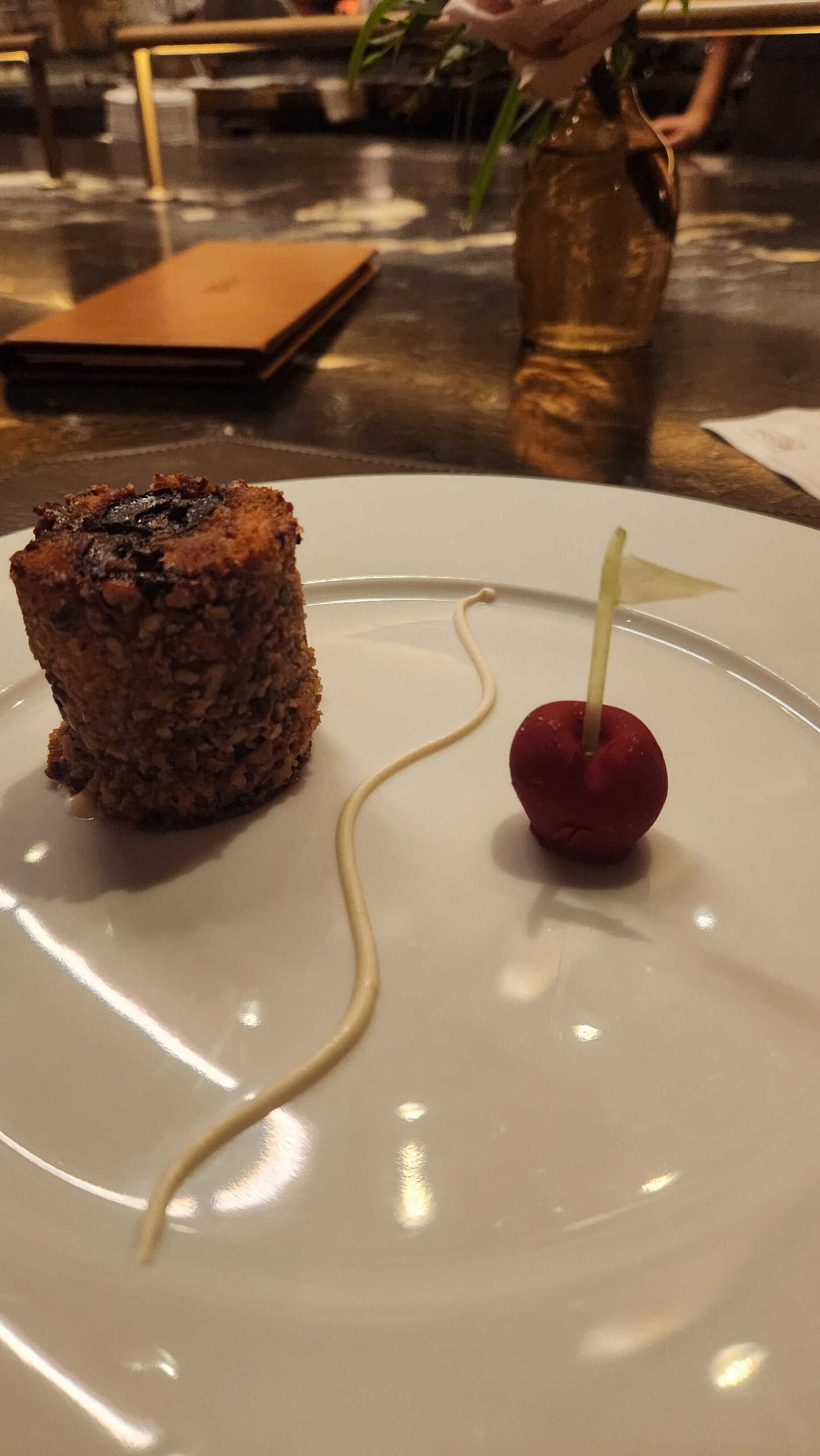
The final plated dessert was the cherry tart, although it did not arrive looking like a traditional slice of tart. The plate included a cake-like component and a glossy cherry-shaped element, complete with a stem.
It was playful without looking like it belonged at a character meal. And after several hours of very serious plating, it was nice to end with something that had a bit more visual whimsy.
Big Sur “Ahh” ($19)
Michter’s Kentucky Bourbon, Lemon Juice, Sage Blossom Honey Syrup, Cardamom-Mulled Syrah
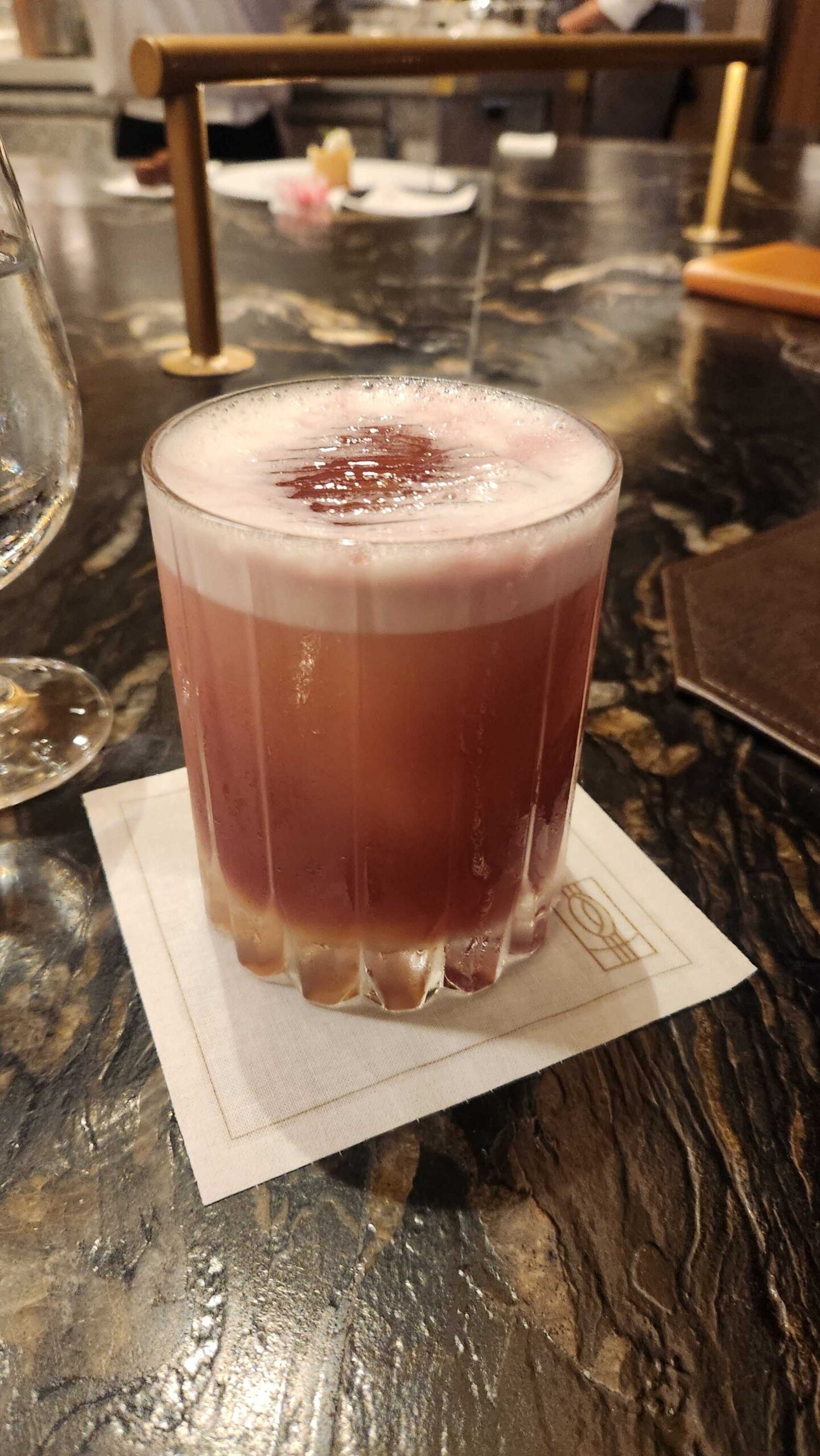
The Big Sur “Ahh” is reminiscent of a New York Sour: bright and tart from the lemon, lightly sweetened with honey, and rounded out by the fruit and spice of the red wine.
Despite the deep pink color and thick foamy top, it wasn’t overly sweet. The lemon kept it refreshing, while the bourbon and cardamom gave it enough depth to feel appropriate for a long tasting menu rather than like a fruity drink you’d finish before the second course arrived.
At $19, it was also one of the more financially reasonable decisions I made that evening. “Reasonable” being used very loosely in the context of a $250 tasting menu.
Angels Camp Bohea ($18)
Earl Grey Infused Knob Creek Bourbon, Carpano Sweet Vermouth, Amaro Nonino, Candied Orange, Lavender
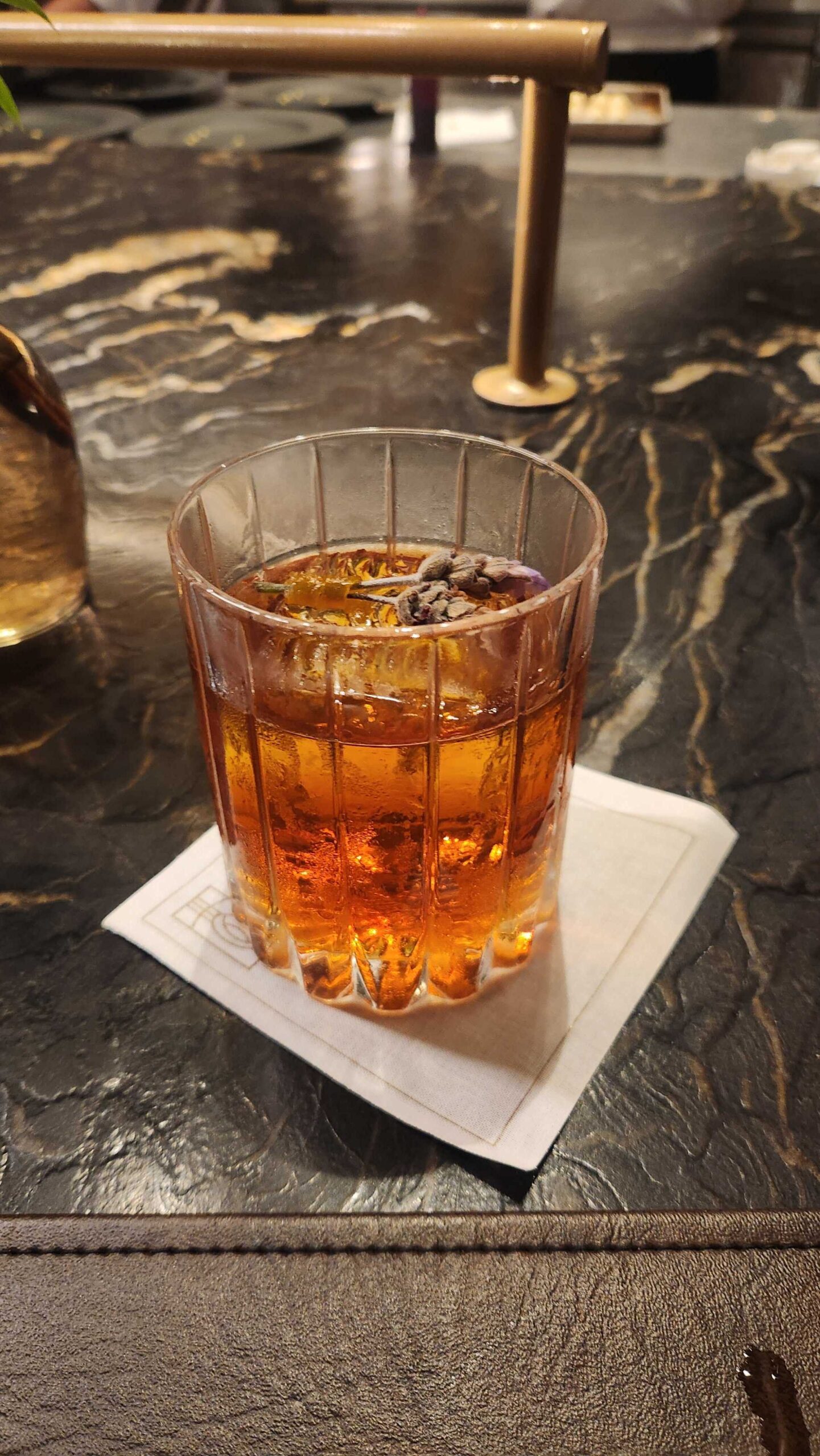
This is absolutely the cocktail for bourbon lovers. It is spirit-forward, slow-sipping, and much closer to a Manhattan-style drink than something light or refreshing.
What makes it stand out is the Earl Grey infusion. The tea adds a subtle citrusy, floral depth that works beautifully with the orange and lavender, while the Amaro Nonino softens some of the bourbon’s sharper edges without making the drink sweet. It still tastes very much like bourbon, but not like a drink you could order anywhere.
Between the two cocktails, this was my favorite. It felt especially well suited to the richer second half of the meal, and the flavors were distinctive enough that I kept noticing new things as I drank it.
Is Napa Rose Chef’s Counter Right For You?
- If you love watching professional kitchens operate, the Chef’s Counter may be right for you. You are paying for proximity to the chefs as much as you are paying for the food. You can watch dishes being plated, see the kitchen respond to the pace of the dining room, and ask questions when chefs deliver courses. Just don’t expect nonstop conversation or a private cooking demonstration created solely for your party.
- If you want a private or romantic dinner, think carefully about the seating arrangement. Unless your party fills all six seats, you will be seated with other guests. And depending on the configuration, you may be assigned to the table beside the kitchen instead of directly at the counter. That doesn’t make the experience bad, but it does make it different from the mental image many people will have when booking a “Chef’s Counter.”
- If you are looking for Victoria & Albert’s-style service, this is not the California version of that experience. Napa Rose is polished, but more casual and less choreographed. The chefs primarily interact when presenting courses and answering questions. We weren’t given a menu or a detailed written record of the meal until we asked for one. Some guests will prefer that less-formal style. Others may wonder why a $250 tasting menu doesn’t feel more prepared.
- You do not need to purchase the most expensive wine pairing to enjoy the meal. Napa Rose has an impressive wine program, and the pairing was thoughtfully selected. But our $500 top-tier pairing did not feel necessary, and I would not repeat it. I would rather spend significantly less on cocktails or a couple of individual glasses selected with help from the sommelier.
- The food was excellent, but I’m not convinced the Chef’s Counter is automatically the best way to experience Napa Rose. The counter gives you a unique look into the kitchen, but Napa Rose also has a main dining room with a prix fixe menu and a lounge with à la carte food and cocktails. On my next visit, I would personally be more likely to try the lounge or main dining room than repeat the Chef’s Counter.
That does not mean I regret doing it. I’m glad I experienced it!. The potato, egg, and caviar; truffle Chianti pasta; and A5 wagyu were all spectacular. Watching the kitchen operate from a few feet away was fascinating. And the entire meal felt meaningfully different from a normal dinner reservation.
But at this price, “excellent food” is the starting expectation.
For someone choosing between spending this money at Napa Rose Chef’s Counter or Victoria & Albert’s, I’m not ready to make a final declaration yet. I have another Victoria & Albert’s reservation coming up soon, so a more direct comparison will follow. Based solely on this experience, I would recommend the Chef’s Counter most strongly to serious food lovers who specifically want the open-kitchen access – not simply to anyone looking for the best expensive Disney meal.
You May Also Like...
-

Red Rose Taverne is a quick service restaurant located in Fantasyland at Disneyland in Anaheim, California. During the day this Beauty…
-
Red Rose Taverne is a quick service restaurant located in Fantasyland in Disneyland. We've reviewed this Beauty and the Beast-themed eatery…

Just went tonight, 7/31/26, and our menu was very similar for the savory courses. Dessert courses were completely different. The dinner prices were still the same, $250 at the chef’s counter, but the wine pairings are now $175, $350, and $550. Not that this is published anywhere, and my email confirmation from
7/22/26 still has the pricing at $125, $300, and $500.
I agree with the review 100%. My husband and I did this experience a few years ago. the food was excellent but there was far less interaction with the staff than i expected. At that time they played up that the menu would be custom tailored to our tastes, but they asked only a few questions about what type of food we liked and rushed us through the answers.
Love love love the indepth review, the comments about what to expect, how it compares to V&A. It looks like the value is there for the food portion of the evening, even if the supreme wine package may not be for some guests!